The absolute worst part of the holidays wasn’t the travel travails, shopping stress, or even the heated family political arguments. It was the incessant questions from so called well-meaning family and friends:
You still doing that writing thing?
So when are we going to see your name on the big screen?
You’re not a kid anymore. Isn’t it time you gave up this writing stuff and got a real job?
It completely knocked the wind out of my sails. I feel discouraged, demoralized, and deflated.
I have been generous in letting Dr. Paige Turner hijack my blog, dig into her mailbag and answer writers’ questions with a suggestive nudge and a saucy wink, not to mention a bit of snark. But, I’ve been getting correspondence of late that begs for me to vent my frustrations and hopefully, shed some light on positive interactions between aspiring writers and industry professionals on Networking Fails and Networking Wins.
My turn!
Hello Barri,
I attended an event today where you were the speaker. Great talk.
Afterwards we actually chatted, shook hands and chatted briefly. You were very nice and personable and made me feel comfortable talking with you.
I mentioned my project, a screenplay I wrote and am championing to produce, and that I certainly need all the help I can get. I hope you become interested enough to get involved or steer me right to move the project forward, make deals or whatever, fast. Well, as fast as humanly possible. Am I asking for too much? I think this story is a money maker.
[NOTE: Tagline and logline omitted.]
I hope you develop an interest from the above enough to help me push this project further.
Big Fan
Dear B.F. and every other writer approaching an Industry Professional,
What is going on, when being polite and professional is misconstrued as an open door that results in a sweeping email request – literally before I have even returned home from the event?
A show of enthusiasm? Yes. But in this industry, that translates to desperation. Even a faint wisp sends people fleeing.
This is no way to win friends and influence people. You, my friend, are doing it all wrong.
To be fair, you’re just one in a long, long, long line of people asking for help in the worst possible way. Folks just screaming, “Help me!” Not even asking for something specific.
Most cringe inducing ask ever: “Can you explain film industry?”
Everyone in the industry faces this and, to be honest, we have two reactions. Our first thought is that this person is not a professional, because they are neither acting nor presenting their project professionally. (I did not clean up the typos and repetition in the email above.) Therefore, there is no point in pursuing this project.
Secondly, it makes us feel as if you are just out to get what you can get from us. This is treating pros like a girl in the bar at last call. A single life preserver on a sinking ship. Therefore, we have no interest in building this relationship.
You’ve quickly convinced an industry professional that you don’t know what you’re doing, and you’ve made them feel used. That their only value is in what they can do for you.
Networking fail.
My friend from the email above included a logline, which I removed here to protect his privacy. Had he asked if he might send me material, I might have said “yes.” Had he asked if I have a preference as to what you send, or how you send it, or genres I respond to as a producer, we might have begun a polite dialogue which could have led to a “yes.” As he didn’t, it made it perfectly easy to quickly read his pitch and decline as “not my cup of tea.” He set himself up for failure.
Please don’t feel picked on B.F.
Here’s another rapid fire exchange from a social media connection:
Writer: Who can you get my story in front of?
Writer: Do you think I could talk to your friends sometime?
Writer: I’d still love your help in any way possible. I’m glad we connected. I know I’ve asked like 100 questions already.
Me: Yup, that’s a lot of questions.
Writer: Lol that’s what I do
Me: Well questions are good, but if that’s your networking MO you will quickly burn out potential relationships, to be honest.
Writer: I’m sorry I was just excited to connect not trying to over do it.
Me: And I’m just sharing some helpful advice with you.
I think the above interaction – minus my generous responses – sums it up. Networking fail.
Networking Vampires
I think we can all agree that in the world we live in, time and energy are the most precious of commodities. Networking vampires are out to drain an industry pros’ lifeblood to feed their own needs – even if it exhausts the source. While I can empathize with the hunger, I fail to understand the lack of common courtesy.
I can’t help thinking of the old joke:
A guy is walking down the street when a prostitute offers to do anything for $50.
“Anything?” he asks.
“Anything,” she agrees eagerly.
He thinks for a moment and says, “Okay. Paint my house.”
While I enjoy working a bit of naughty innuendo into a column or blog as much the next girl, I’m actually a very nice person. I even offer a FREE logline feedback to everyone who signs up for my mailing list. I wish I could tell you that I always receive a thank you for my time and feedback. In truth, that is a rarity.
I’m so kindhearted, that when a writer pleads for my time and advice for free, no matter how grueling my own work schedule and responsibilities are, it’s tough for me to say no. But the more I am burned in these situations, it gets a little bit easier to say “Sorry, I’d like to help, but I can’t.”
Every occasion where I have gone above and beyond and been taken advantage of, makes it that less likely that someone else will get a shot at my very limited free time.
Don’t be that person who burns a relationship from the very start. When you are, you part of the problem that leads to aspiring writers getting shut down across the board. That makes people not want to shake hands after an event. And we’re certainly not going to paint your house.
Mr. Naughty
After another talk I gave, a lovely older gentleman, almost Santa Claus-like, was quite intent on speaking with me, while many other people were hoping to introduce themselves as well. I’m happy to spend time meeting people, but, just as you learned in kindergarten: Wait your turn. Be polite and don’t interrupt someone else’s conversation.
When we spoke, Mr. Claus insisted that he was eager to learn from me. He knew that I was the one to help him achieve his vision. I mentioned an upcoming Big Ideas Seminar, (which comes with mentorship!) but he was adamant that he could not wait.
He insisted he wanted just 15 minutes of my time to pitch me his story. I’m not unrealistic, but I was glad that he had volunteered a timeframe. I set an appointment for him to meet me at a local coffee shop where I would be writing. This way, I could still be a nice guy and save myself the commute time.
Or so I imagined.
For starters, the lovely Mr. Claus did not offer to buy me a beverage. Not necessary, but it would have been a nice gesture.
He pitched his project in great detail. As this seemed to be a highly personal piece to him, I encouraged him to explain the genesis of the story before offering any feedback. I have tons of experience with writers, and I know when to tread lightly.
Now remember, St. Nick begged for my advice. After taking in all that he said, I offered him a thought on a different angle that could make the story more effective and emotionally impactful. He burst into tears. He could not consider varying his story, even to make it more successful. Now I had to do my best to console the Jolly Old Elf.
I understand the human need for validation, but my sought-after professional opinion went to someone plugging their ears with their fingers.
So now here I am, comforting a sobbing Santa as my 15 minutes turns into an hour.
The capper? After pleading for my tutelage, Mr. C. never signed up for the seminar.
And the burn: He didn’t bother to so much as send me a thank you note for my time.
Kindergarten lessons! “Say ‘please’ and ‘thank you.’”
Don’t shake your head and think that this is an isolated incident. Virtually the exact same thing happened to me in identical circumstances. No beverage, no openness to my professional feedback, no thank you note. Networking fail.
For Pete’s sake! If you ask someone for their professional opinion – as opinion that they are trained to and paid to give – at least pretend to be open to, or appreciative of their insights. It’s Pro Networking 101.
It’s Nice To Be Important, But It’s Important To Be Nice
There are writers who are doing it right when it comes to networking.
As in any relationship, common courtesy greases the wheels of social interaction. If you met a friend for coffee, wouldn’t you offer to buy them a cup?
The best relationships builders – in any area of life – approach networking as a two-way street.
In the industry, networking is part of our lifeblood. It is how we get our jobs accomplished. Inside industry networking comes with its own set of unspoken rules and etiquette. Read more pointers in my ScriptMag column, “Inside Industry Politics,” as it is better to know the rules than break them.
Getting It Right
I recently received an email from a writer I met years earlier, while mentoring at a screenwriting retreat. He reminded me of our connection and made a nice reference to something that the two of us could appreciate based on the retreat.
Off to a good start.
Mr. Polite was hoping to produce a short film which he had written, and had a ton of questions that spanned the board from physical production to packaging. But he wasn’t asking me to paint his house. He offered to take me to lunch in return for my advice.
Frankly, I rarely take the time to eat lunch these days, and when I do, it’s often sitting at my desk dropping crumbs on the keyboard. I was in the midst of a massive time crunch.
As this was an issue-oriented piece, one that resonates with a great many people, I told him that this was the key to moving forward. Finding people who shared his passion would make all the difference in putting the production together – from negotiating a good deal on a camera rental to bringing actors on board.
I explained that my personal passion was children’s literacy, and that I founded and run a nonprofit. However, I was certain that he would find plenty of people who would respond strongly to his cause.
I asked to read Mr. Polite’s short before attempting to answer any questions. And I asked that he wait two weeks to send it, as it would most certainly be buried in my correspondence otherwise.
Mr. Polite timed it just right, sent the script, and asked some specific questions. I still couldn’t get to the material, but I sent him a note with an update about others “in line” ahead of him – because I am polite – and received this reply:
Hi Barri, that’s fine, thanks for touching base. I DO understand. Many people, many different projects… I really don’t know how you do it. I will look forward to hearing from you, whenever you’re able.
Nice.
When I had a bit of breathing room, I read the pages, looked at his website, and gave him some feedback on both. I offered a phone chat or a quick cup of coffee.
He was appreciative. He was open to my thoughts on the material and on the presentation. Mr. Polite said that forcing himself to write out his questions brought him a lot of clarity. He told me he appreciated the time and effort I had already given him. He would pass on the chat for now, and reserve it for further along in the process when he would have specific questions that I could answer.
Overall, I felt positive about the whole exchange. I had been able to offer some support, and my time and advice were appreciated. I knew the pleasant and respectful exchange would make me open to helping Mr. Polite in the future. Throughout this entire exchange Mr. Polite’s networking worked.
Networking Win!
And then this happened:
Mr. Polite made a very nice donation to my nonprofit. Truly above and beyond.
I was genuinely touched, and wrote him immediately to say how incredibly gracious he had been.
This writer now has a very open door to me. You can bet he will get my time and attention when next he asks.
It’s not about the time and energy it takes, or about giving away knowledge, expertise and insights that we’ve worked long and hard to gain. It’s about being treated as a human being.
Mr. Polite respected my needs and boundaries. He was open to, and appreciative of my input. He thanked me. Mr. Polite listened and paid attention to what mattered to me.
Isn’t that what all of us want in a relationship? To be heard and respected?
This networking thing isn’t nearly so complex as many aspiring writers think.
The choice comes down to “Paint my house!” or “Do unto others.”
TV writing is the place to be right now. Writers would do anything to break into TV writing with exceptional new series gaining popularity, top talent signing on, and new content providers popping up right and left. Plus there’s the opportunity to create sweeping character arcs that span seasons.
While there are more paths to writing for TV than ever before for, my story – I promise you – is one of a kind.
As President of Debra Hill’s production company, my job was to bring in and set up new projects and move current projects into production. Moving projects forward is like pushing a massive boulder up a steep, craggy hill: a Sisyphean task.
The best way to make it easier is by getting more people to push with you. In the film business, that means packaging. “Can we add a director or a star to make this project more appealing to a studio?”
I needed to build more relationships with the people who ran companies for actors and directors, so I could bring appropriate projects to them. My Junior Exec and I scoured the list of studio deals and came up with a group of people that I wanted to meet. Then I’d make a couple of cold calls each day, to ask for a lunch, drinks, or a general meeting.
I met a lot of great people that way, learned what their companies were looking for, and formed relationships that would be productive for us both.
But even the best of plans can go awry.
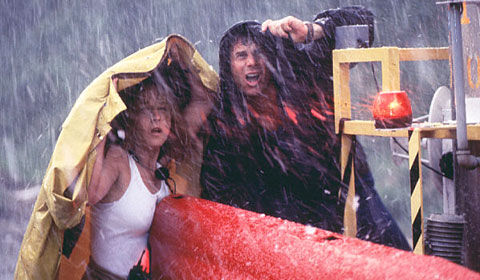
Twister helped me break into TV writing
At the time, actress Helen Hunt had a deal at Sony, where she had made the big disaster film, Twister. Sony was also the producer of her popular television series Mad About You. I wasn’t quite certain what we would do together, but we had a lot of great relationships with Sony execs who would be open to our projects. We set a meeting at their offices.
Helen’s lovely Junior Exec surprised me by bringing in her boss, the Head of the company, who had been Helen Hunt’s manager and was now her producing partner. Without a specific agenda, this was pretty much a blind date. We were getting to know each other and seeing if there was and chemistry.
The personal ad for a production company isn’t: “We like long walks on the beach, go to the gym every day and look equally good in jeans as in a little black dress.” Our introduction is our projects. Talking about the stories we are passionate about bringing to the screen is how we say, “This is what we like; this is who we are.”
After some chitchat about spinning – a form of exercise that still scares me – I launched into pitching our projects. I am a good pitcher. I was passionate about these projects, and I could pitch them while hanging upside down by my ankles over a pit of alligators.
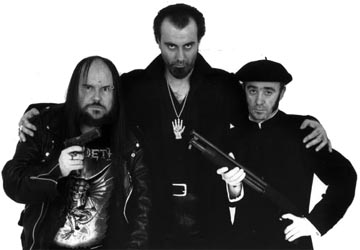
Delighted that there was a spark, I launched into our English language remake of an award-winning Spanish film, El Dia de La Bestia, The Day of the Beast. a dark horror-comedy about three very different men brought together to save the world from the pending apocalypse. It was edgy and offbeat, but Debra and I had responded to the great male characters, their arcs, and the quest. In our minds, it was reminiscent of The Fisher King, about two men and a quest, a very special film that Debra had produced which garnered numerous accolades including five Oscar nominations.
I was about to plunge on when the Producer stopped me. She really liked this idea. So did the Junior. Could they see the film? Umm, there’s no role for Helen Hunt here. The main character is a priest for God’s sake!
Could we change it? Make the priest a nun? Not really.
I knew this wouldn’t be their cup of tea, but they were excited. Although I tried, I simply couldn’t politely discourage them.
There was some interest in an original idea that Debra had for a film, the project I believed would be perfect for Helen. Indeed, it was a commercial idea, and later became the basis for a series that someone else produced before we could get it off the ground. But nothing could diminish their excitement about The Day of the Beast.
I returned to the office, chagrined at what I had inadvertently accomplished, and now had to report to my boss. Debra and I tried to strategize a way to get out of the screening. I had a one-page description of the film. I’d send it over and surely, with more information, they’d realize that it wasn’t for them.
Nope. They definitely wanted to set up a screening at the Sony lot.
From there, it simply snowballed. They wanted Helen to see the movie too. If Helen was coming, Debra had to join us. Since Helen was screening something, her Studio Exec was interested as well. As Helen was going to be on the lot, the President of Production wanted to stop by to say hello before we began. An innocent, “We like long walks on the beach” had turned into meeting the family and friends.
On the day of the screening, I was running late. Well, that’s pretty much a natural state of being for me. From our offices in Santa Monica, I hit the 10 Freeway, pushing 80 MPH in the fast lane headed for Culver City. I had to get there first.
I ran to the screening room, flung open the door, and was incredibly relieved to see that only Debra and Helen’s execs had arrived. Whew! I had time to go to the restroom and catch my breath.
Sprinting down the hall, I was back in a flash. I flung open the screening room door, prepared to rush inside – completely unaware that Helen Hunt was standing on the other side. I nearly knocked her to the ground; barely managing to stifle a scream. An excellent start.
Debra was enthusiastic. The Studio Exec schmoozed. The President of Production said a few gracious words, and then both left. We were ready to screen the film. I gave a short introduction, and as the lights lowered, Debra slipped out.
You may be unfamiliar with studio screening rooms. They are mini movie theatres with giant reclining chairs – plusher and wider than any seat you’ve ever paid fourteen bucks for. They make La-Z-Boys look anorexic. On the way in, you pass the projection booth, where there is a projectionist and your print.
In the center, a few seats have been removed for a control panel. It has nearly as many buttons as an airplane cockpit – few of which I could identify. There’s a phone that provides a direct line to the booth. I sat beside the console, picked up the phone and, feeling cool and in control, asked the man in the booth to please start the film.
It was just the four of us; with Helen, her Producer and the Junior Exec seated in the row in front of me.
The film began. Being in Spanish, it had English subtitles. The set up of this movie (SPOILER ALERT) is that a priest, who has dedicated his life to studying the Book of the Apocalypse – long believed to contain a hidden meaning – has finally unlocked the secret it holds – the exact date of the beginning of the end of the world. Turns out, it’s the day after tomorrow. He’s determined to go out into the world and commit as many acts of evil as possible to attract the devil and then trick him into revealing where the anti-Christ will be born, heralding the beginning of the end of the world, so he can stop it.
The little priest goes to his Monsignor in the Cathedral and, believing that the Devil could be listening, whispers his discovery while the church bells toll. As the secret cannot be heard in dialogue, there are no subtitles.
Helen leaned way back in her BarcaLounger and, with her left hand, beckoned me toward her. I uncrossed my legs and leaned toward her from the depths of my giant chair. “Crunch!” I kicked her directly in the diamond engagement ring. A very nice ring to be sure. Swell.
Helen whispered that she would like to have the volume turned up. Somehow, she failed to grasp that were no subtitles at that point because, just like the original Spanish-speaking audience, we are not mean to be privy to the whispered exchange.
Nevertheless, if that’s what Helen wanted, I was going to make it happen. Confronted by the baffling buttons, I tried not to panic. I picked up the phone and spoke to the nice man in the booth. Could he please turn up the volume? Mission accomplished. I relaxed back in my seat, satisfied that had been a problem-solver. I probably hadn’t permanently damaged Helen Hunt, and the ring – true to the mark of a real diamond – had remained intact. Disaster averted.
From there… it went straight to hell.
Helen Hunt crying – but not because of me.
Helen and her crew didn’t merely dislike the film; the dark parts literally made them cringe and cover their eyes. Witnessing their reaction meant that I was suffering right along with them.
I interjected a few times, trying to explain that many things would change in the adaptation. Our version wouldn’t include someone wringing the neck of a fluffy little bunny to make a cheap stew – it would be more like… Hamburger Helper.
But rabbit was the last straw for Helen and her crew. This wasn’t a screening. This was torture. I bravely suggested that we take a break at the midpoint. The lights came up, and I stood before the screen. Desperate to salvage the situation, I asked innocuously if they would like to watch the rest of the movie, or would they prefer that I tell them how the story ended.
Telling them was the unanimous choice.
We eventually hired a writer to do a terrific English language version of The Day of the Beast. There were definitely no dead bunnies.
We never found a project with Helen, but there was an unexpected outcome.
About a year later, I was watching an episode of Mad About You. At this point, Helen Hunt was not only the co-star, but a producer on the show. Half way through, Paul Reiser, the series star and co-creator, was on the couch watching a foreign film and chomping away on a big bowl of potato chips. Helen’s character, his wife Jamie, joined him.
“Paul?” she said sweetly.
“Yes, dear,” he replied.
“You’re chewing so loudly I can’t hear the movie.”
“Honey,” Paul said, “it’s subtitled.”
And just like that, I had broken into TV!
Everyone has their own story about breaking into TV writing.
What will your’s be?
Watch me break into TV writing on Mad About You, Season Seven, Millennium Bug episode here.