TV writing is the place to be right now. Writers would do anything to break into TV writing with exceptional new series gaining popularity, top talent signing on, and new content providers popping up right and left. Plus there’s the opportunity to create sweeping character arcs that span seasons.
While there are more paths to writing for TV than ever before for, my story – I promise you – is one of a kind.
As President of Debra Hill’s production company, my job was to bring in and set up new projects and move current projects into production. Moving projects forward is like pushing a massive boulder up a steep, craggy hill: a Sisyphean task.
The best way to make it easier is by getting more people to push with you. In the film business, that means packaging. “Can we add a director or a star to make this project more appealing to a studio?”
I needed to build more relationships with the people who ran companies for actors and directors, so I could bring appropriate projects to them. My Junior Exec and I scoured the list of studio deals and came up with a group of people that I wanted to meet. Then I’d make a couple of cold calls each day, to ask for a lunch, drinks, or a general meeting.
I met a lot of great people that way, learned what their companies were looking for, and formed relationships that would be productive for us both.
But even the best of plans can go awry.
Twister helped me break into TV writing
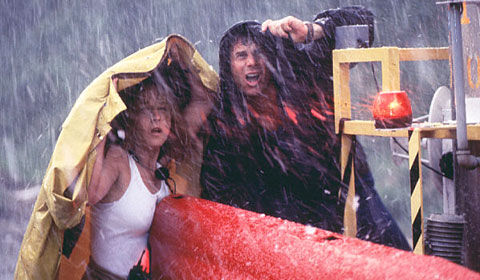
At the time, actress Helen Hunt had a deal at Sony, where she had made the big disaster film, Twister. Sony was also the producer of her popular television series Mad About You. I wasn’t quite certain what we would do together, but we had a lot of great relationships with Sony execs who would be open to our projects. We set a meeting at their offices.
Helen’s lovely Junior Exec surprised me by bringing in her boss, the Head of the company, who had been Helen Hunt’s manager and was now her producing partner. Without a specific agenda, this was pretty much a blind date. We were getting to know each other and seeing if there was and chemistry.
The personal ad for a production company isn’t: “We like long walks on the beach, go to the gym every day and look equally good in jeans as in a little black dress.” Our introduction is our projects. Talking about the stories we are passionate about bringing to the screen is how we say, “This is what we like; this is who we are.”
After some chitchat about spinning – a form of exercise that still scares me – I launched into pitching our projects. I am a good pitcher. I was passionate about these projects, and I could pitch them while hanging upside down by my ankles over a pit of alligators.
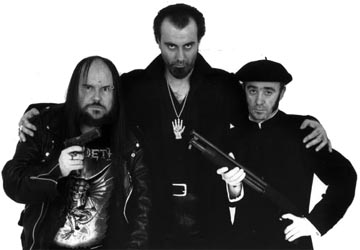
Delighted that there was a spark, I launched into our English language remake of an award-winning Spanish film, El Dia de La Bestia, The Day of the Beast. a dark horror-comedy about three very different men brought together to save the world from the pending apocalypse. It was edgy and offbeat, but Debra and I had responded to the great male characters, their arcs, and the quest. In our minds, it was reminiscent of The Fisher King, about two men and a quest, a very special film that Debra had produced which garnered numerous accolades including five Oscar nominations.
I was about to plunge on when the Producer stopped me. She really liked this idea. So did the Junior. Could they see the film? Umm, there’s no role for Helen Hunt here. The main character is a priest for God’s sake!
Could we change it? Make the priest a nun? Not really.
I knew this wouldn’t be their cup of tea, but they were excited. Although I tried, I simply couldn’t politely discourage them.
There was some interest in an original idea that Debra had for a film, the project I believed would be perfect for Helen. Indeed, it was a commercial idea, and later became the basis for a series that someone else produced before we could get it off the ground. But nothing could diminish their excitement about The Day of the Beast.
I returned to the office, chagrined at what I had inadvertently accomplished, and now had to report to my boss. Debra and I tried to strategize a way to get out of the screening. I had a one-page description of the film. I’d send it over and surely, with more information, they’d realize that it wasn’t for them.
Nope. They definitely wanted to set up a screening at the Sony lot.
From there, it simply snowballed. They wanted Helen to see the movie too. If Helen was coming, Debra had to join us. Since Helen was screening something, her Studio Exec was interested as well. As Helen was going to be on the lot, the President of Production wanted to stop by to say hello before we began. An innocent, “We like long walks on the beach” had turned into meeting the family and friends.
On the day of the screening, I was running late. Well, that’s pretty much a natural state of being for me. From our offices in Santa Monica, I hit the 10 Freeway, pushing 80 MPH in the fast lane headed for Culver City. I had to get there first.
I ran to the screening room, flung open the door, and was incredibly relieved to see that only Debra and Helen’s execs had arrived. Whew! I had time to go to the restroom and catch my breath.
Sprinting down the hall, I was back in a flash. I flung open the screening room door, prepared to rush inside – completely unaware that Helen Hunt was standing on the other side. I nearly knocked her to the ground; barely managing to stifle a scream. An excellent start.
Debra was enthusiastic. The Studio Exec schmoozed. The President of Production said a few gracious words, and then both left. We were ready to screen the film. I gave a short introduction, and as the lights lowered, Debra slipped out.
You may be unfamiliar with studio screening rooms. They are mini movie theatres with giant reclining chairs – plusher and wider than any seat you’ve ever paid fourteen bucks for. They make La-Z-Boys look anorexic. On the way in, you pass the projection booth, where there is a projectionist and your print.
In the center, a few seats have been removed for a control panel. It has nearly as many buttons as an airplane cockpit – few of which I could identify. There’s a phone that provides a direct line to the booth. I sat beside the console, picked up the phone and, feeling cool and in control, asked the man in the booth to please start the film.
It was just the four of us; with Helen, her Producer and the Junior Exec seated in the row in front of me.
The film began. Being in Spanish, it had English subtitles. The set up of this movie (SPOILER ALERT) is that a priest, who has dedicated his life to studying the Book of the Apocalypse – long believed to contain a hidden meaning – has finally unlocked the secret it holds – the exact date of the beginning of the end of the world. Turns out, it’s the day after tomorrow. He’s determined to go out into the world and commit as many acts of evil as possible to attract the devil and then trick him into revealing where the anti-Christ will be born, heralding the beginning of the end of the world, so he can stop it.
The little priest goes to his Monsignor in the Cathedral and, believing that the Devil could be listening, whispers his discovery while the church bells toll. As the secret cannot be heard in dialogue, there are no subtitles.
Helen leaned way back in her BarcaLounger and, with her left hand, beckoned me toward her. I uncrossed my legs and leaned toward her from the depths of my giant chair. “Crunch!” I kicked her directly in the diamond engagement ring. A very nice ring to be sure. Swell.
Helen whispered that she would like to have the volume turned up. Somehow, she failed to grasp that were no subtitles at that point because, just like the original Spanish-speaking audience, we are not mean to be privy to the whispered exchange.
Nevertheless, if that’s what Helen wanted, I was going to make it happen. Confronted by the baffling buttons, I tried not to panic. I picked up the phone and spoke to the nice man in the booth. Could he please turn up the volume? Mission accomplished. I relaxed back in my seat, satisfied that had been a problem-solver. I probably hadn’t permanently damaged Helen Hunt, and the ring – true to the mark of a real diamond – had remained intact. Disaster averted.
From there… it went straight to hell.
Helen Hunt crying – but not because of me.
Helen and her crew didn’t merely dislike the film; the dark parts literally made them cringe and cover their eyes. Witnessing their reaction meant that I was suffering right along with them.
I interjected a few times, trying to explain that many things would change in the adaptation. Our version wouldn’t include someone wringing the neck of a fluffy little bunny to make a cheap stew – it would be more like… Hamburger Helper.
But rabbit was the last straw for Helen and her crew. This wasn’t a screening. This was torture. I bravely suggested that we take a break at the midpoint. The lights came up, and I stood before the screen. Desperate to salvage the situation, I asked innocuously if they would like to watch the rest of the movie, or would they prefer that I tell them how the story ended.
Telling them was the unanimous choice.
We eventually hired a writer to do a terrific English language version of The Day of the Beast. There were definitely no dead bunnies.
We never found a project with Helen, but there was an unexpected outcome.
About a year later, I was watching an episode of Mad About You. At this point, Helen Hunt was not only the co-star, but a producer on the show. Half way through, Paul Reiser, the series star and co-creator, was on the couch watching a foreign film and chomping away on a big bowl of potato chips. Helen’s character, his wife Jamie, joined him.
“Paul?” she said sweetly.
“Yes, dear,” he replied.
“You’re chewing so loudly I can’t hear the movie.”
“Honey,” Paul said, “it’s subtitled.”
And just like that, I had broken into TV!
Everyone has their own story about breaking into TV writing.
What will your’s be?
Watch me break into TV writing on Mad About You, Season Seven, Millennium Bug episode here.
There are two great enemies to your success as a writer.
You might think it’s 1) not living in L.A. and 2) not having an agent.
But you’d be wrong.
Your time and creative juice are your greatest commodities as a writer. If you don’t have those, you won’t make progress. You are being robbed of them every single day.
You have to bring home the bacon, take out the trash, walk the dog, and put the kids to bed. Even if you do manage to carve out a little time, you can’t just turn on the creative juices on like a faucet and beautiful sentences will pour forth. One of the biggest obstacles to getting into the writing zone – that sweet spot where it just flows, is the siren song of distraction. It feeds on our fears and doubts and thrives on the human tendency to procrastinate.
This beast eats up minutes that turn to hours and consumes your energy and attention. Perhaps you are one of the few that is not afflicted. If so, lucky you!
I once had to stop writing a script to defrost the freezer because the icy build up was driving me mad. Eager to accomplish the task, I devised a special speed defrost technique that primarily involved a butcher knife. The Maytag Repairman wouldn’t recommend this.
“The Great Escape” starring Steve McQueen. Star in your own escape!
And now, neither would I.
What makes the killer of time and creativity a real horror story is that, all too often, “The call is coming from inside the house!” Perhaps you don’t feel like a prisoner trapped in your own workspace, but whether it’s your home office, your tool shed or a nifty set up on a studio lot, your regular writing space is packed with monsters and landmines there to sabotage you. Blake Snyder famous for the screenwriting book, Save the Cat. called this “Bungalow Fever” and advocated for “evacuating the premises.” Good advice.
Never underestimate the power of a change in location to switch things up. Routine has its advantages, but it can also become mind-numbing.
An afternoon or a day away can be refreshing. A weekend or a week in a new physical and mental space can truly reinvigorate you.
Screenwriting Retreats Around the World and Around the Corner
Experience exotic Costa Rica with Jacob Kruger. Long expanses of beach; yoga in the morning, movies at night and classes in between.
Dave Trottier will help you polish your script till it shines at Sundance.
Maybe you’d prefer a chateau in France with James Bonnet.
Screenwriter’s Summer Camp – A Retreat and a Career Boost
For me, when it comes to retreats I head for the hills, specifically a getaway to the mountains. This June I’m off to Screenwriter’s Summer Camp!
I’m thrilled to be returning to Idyllwild Arts Summer Program and teaching a weeklong intensive, Screenwriting Revolution: Creating and Marketing Successful Screenplays, June 16 through 20. It’s held in Idyllwild, CA, two hours East of Los Angeles, a half hour uphill, in the mountains above Palm Springs.
And since we’re so close to L.A., on our final day I’ll be importing high-level industry professionals devoted to getting to know you and work with you. Trust me, you won’t find these folks at a Pitch-a-palooza at any price, much less sitting across the table from you at lunch.
Maybe you’re not feeling as if you need to tunnel your way out of an escape-proof POW camp, but this is the opportunity to get away from work, family, friends, Facebook and give your career an enormous boost.
Screenwriters at all levels of experience and proficiency will build the skills, knowledge, concepts, and relationships needed to make breaking into the industry a reality. Develop ideas with expert guidance, hone essential professional skills, and gain invaluable personal and industry insight. Establish real industry relationships.
Spend a week focused on understanding the industry from the inside and how to use that newfound knowledge, create and develop concepts that will ignite industry interest. Discover your passions and your strengths to elevate your stories. Master the art of pitching with skill and confidence. Gain powerful tools, techniques, and templates that will revolutionize your writing process, making it faster and more successful.
Advance Assignments will take you on a journey of self-discovery, spark creativity, and give me insights into making your week truly transformational. You will thrive with intimate, one-on-one work, benefit from group exercises, and see structure with utter clarity as we watch and discuss a film together.
Our week culminates in a day spent developing relationships with three working industry professionals – an agent, development executive and studio executive or manager. Since we’re so close to Los Angeles, they’re leaving their offices to join us.
We begin with introductions and Q & A in the morning, and then enjoy getting to know one another on a personal basis over lunch. The afternoon is devoted to listening to your polished pitches, with a generous amount of time to provide feedback on concept, market potential, pitching technique, as well as advice on how to move your work forward in the marketplace.
When you’re not in class or writing, discover why Idyllwild is best described as “idyllic.” It is the ideal location for a screenwriting retreat. This quaint, yet sophisticated mile-high town has more elevation than population and is home to the arts and artists of all kinds.
You won’t find is parking meters, traffic lights, or a rush hour.
There are unique shops to explore; offering handcrafted art, clothing and “build-your-own” ice cream bars. Enjoy little ethnic restaurants, as well as gourmet fare with live music playing on the patio. There’s even a movie theatre, with one movie playing twice a day, and the only video and DVD rental store in its lobby!
Take a hike. Wander the fabulous trails or hit the challenging ones. Unwind to the sound of the wind whistling through the tall trees, inhale the pine-scented breeze, contemplate the spectacular vistas.
Retreat = Relax, Energize, Tune In, Realize, Evolve, Advance, Thrive
No matter where you choose go for your retreat, even if it’s just the local library or a cool coffee shop, “Get out, get out, get out of the house!” Give yourself and your career the time and energy they deserve.
Send yourself to Summer Camp! Get what you need to succeed.
My friend, the talented screenwriter and director Glenn Gers, whose work includes Fracture and Mad Money has my all time favorite “Little Engine That Could” story. Glenn wrote his first spec script in 1984. First scripts never go anywhere, right? Glenn’s got him an agent right off the bat. “People liked it. No one would make it, but they liked it,” says Glenn. “They offered me jobs writing other scripts.” Five years later, it was optioned by a major producer. Five years after that, it was optioned by a studio for A-list stars. Glenn was promptly fired off his own project. Three years later, he got the rights back. “More stars and directors have wanted to do it since; one got a company to finance it but then the company went out of business.” Last year, a producer and director were working to put it together as an indie production. And, as of today, a producer has just reached out to Glenn in hopes of making the project happen with a major star…
Thirty years and still going. Here’s Glenn’s story of the Energizer Bunny of Spec Scripts:
In “the business,” getting a script made into a movie is the holy grail, the big brass ring, the kingdom of heaven. But the truth is, most scripts don’t get made. Most don’t even get sold. How, then, do we estimate the worth of a script?
I personally vote for reader response. Not in a professional sense, from paid estimators of the current enthusiasms of corporate entities and marketing departments, measurers of adjustment to formula. I mean the response of a human being, whatever their job description, to the story and the way it is told. It’s often hard to sort through the morass of professional opinionizing, but after a while you can tell if a script works by — simply — whether people “get it”.
If you wanted them to laugh or cry or get angry — and they do, then you win.
If a script “works,” it doesn’t always have to sell to be successful. I wrote my first feature screenplay on impulse. I was not aware of any “rules,” I just tried to make stuff happen like it did in movies I liked. Alas, many of those movies were made in the 1970s, so I get a lot of, “But you can’t do that.”
But I did it, and it kind of worked. It was a mix of comedy and thriller and romance. People liked it. No one would make it, but they liked it. They offered me jobs writing other scripts.
They also offered me advice on what didn’t work in my script, and sometimes that would show me something I could fix. So I’d rewrite it. It got better. I liked it more. So did other people. It was optioned. It came out of option. More people liked it. They mentioned things they didn’t “get” – and sometimes I rewrote it to fix those things.
This script has been around for almost 30 years now. It is vastly different than when I first wrote it. Characters use cell phones, for example. It’s also a lot better. (Rewrite something for 25 years…it’s pretty solid.) People still try to get it made. People still hire me to write other scripts, because they read it.
It is, according to the standard estimate…kind of a failure. I still haven’t sold that spec script.
You deserve answers. You won’t be satisfied until you get them.
So occasionally, I’ll be handing my blog over to my darling friend, Dr. Paige Turner, to address your most perplexing questions. The ones that keep you up at night, tossing, turning, tortured.
I have every confidence Dr. Turner will deliver just what you are craving.
The floor is entirely yours, Dr. P.T.
Dear Dr. Paige Turner,
How do I know my script is done and ready to be in front of the eyes of the industry?
Should I just keep endlessly rewriting?
Yours Truly,
Uncertain
Dear Truly Uncertain,
You pose an excellent question.
Unlike in other pursuits, there are no subtle clues when script is finished. No heavy breathing, no groans of pleasure, no one calling out your name or even inadvertently moaning, “Oh, Bill, Bill, Bill Goldman.”
But, if you are aiming for fireworks, here are some things to take into consideration:
Have you devoted enough time to foreplay?
There’s plenty of groundwork to be laid before one starts caressing the keyboard. If you hope to send tingles down your reader’s spine, you had better know your way around your story’s spine. Did you devote yourself to planning your screenplay before typing “Fade In?” Whether you use corkboards or computer programs, prewriting is a key strategy for scoring.
Is there chemistry?
Your idea should grab us right from the start. As your story is revealed, we should find it intoxicating. A little unpredictability is hot. Your every move feels deliberate, designed to turn us on. Every element of your script comes together, supporting the core concept. Your hero drives the story. The conflict builds and escalates relentlessly toward the climax, leaving us breathless. Of course Truly, I don’t need to tell you that there’s no happy ending without a satisfying finish.
Was it good for you too?
It’s easy to be impressed with your own performance. After all, you gave it your best moves. This is your baby. It’s nearly impossible to be objective about it. Chances are you are so caught up in the lush fantasy movie unspooling in your mind, that you may not realize what is missing on the page. Get some fresh eyes. Start with writer friends who offer reliable, constructive feedback on your latest rewrite. Beware those wingmen who fake it with over the top flattery, as well as those who attempt to turn your story into their story.
Are you scoring in contests or repeatedly striking out?
Many writers turn to contests to gage their writing, and send in a rewrite the next year to see if it scores higher and makes the cut. This can be a lengthy and slow process. Research contests and what they offer. Search for the right fit. Find out other writer’s experiences. There are so many out there. I recommend MovieBytes for the inside scoop – created by a writer, for writers, and jam packed with info and opinions from those who have come before you.
Before you’re through rewriting, spend some time with a pro.
The opinion of a well-respected professional who has been around the block a few times will cost you, but their opinion is well worth it.
The short answer: You can’t tell.
That’s why I recommend a pro to bring you some fresh insights and offer constructive and objective advice. Be sure to check them out first, and get some recommendations from other satisfied customers!
Is your script turning us off before we even turn to Page 1?
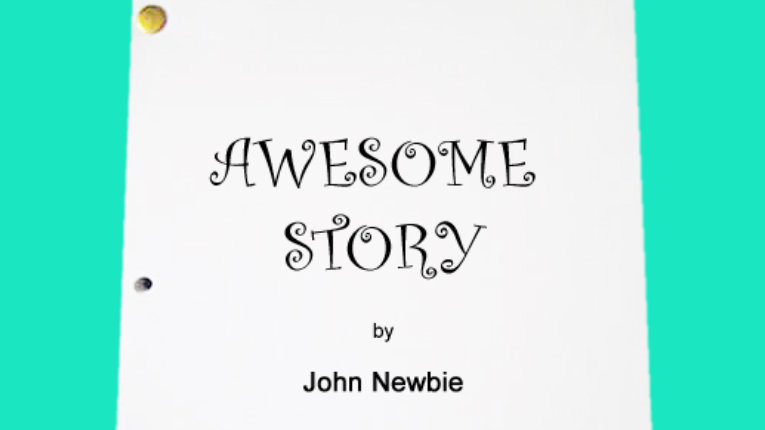
This cover page screams Newbie Writer!
You might be surprised to learn that your cover page speaks volumes to industry pros. You can convince us you are an inexperienced screenwriter before we even open your script. Your cover page is more telling than you think.
No Special Fonts For The Title
Stick with 12 point Courier or Courier Final Draft. It’s what we’re used to. You don’t gain any points for a unique cover page. And your time is better spent proofing your script than searching for a clever font.
Don’t List The Draft Number
Not only do we not care, but if it is your seventh draft we may think you are a one trick pony, endlessly rewriting the same script. On the other hand, why would you brag that it’s a first draft? That says it probably needs to be honed and polished. Draft information is for you only unless you’re working on a project in active development. Then we’re looking for a draft date not a draft number.
No Draft Dates
No matter when or why we are reading it, we prefer to feel it’s new rather than a piece of material that’s been around the block. Back in the dark ages, the agent I was working for had me white out the draft date on a script before copying it and sending them out. All scripts should feel brand new. It makes them seem special. If something is just now going out, there’s more buzz than there is for a script that has been lying around.
Just The Facts Ma’am
TITLE, all caps centered. No need to underline.
Contact info in the lower right corner, near the bottom of the page, left justified:
Your name. Your address. Your phone number. Your email address.
Registration
You can add a WGA registration number or US copyright number in the lower left hand corner of the page. Left justified.
The Look
When printing out a script on paper, offset the margins to allow for brads. Back in the olden days, we’d make the left margin about three-quarters of an inch wider than the right to account for brads or, more often, script covers which might have a fold as wide as an inch. Take a moment to measure so your title is really centered.
Honestly, none of these no-nos will keep anyone from reading your script. You might get an eye roll, but we’re still going to turn the page and hope for a great story.