You wouldn’t play darts blindfolded? Target Hooky Ideas!
In industry meetings, we’re constantly asking writers, “What’s Next?” eager to hear about their next project, hoping it’s a terrific idea.
Screenwriting is about decision-making – thousands upon thousands of decisions. But the single most important decision you will ever make as a writer is what to write next. I guarantee it.
George Lucas
According to George Lucas, who knows a bit about filmmaking, “A movie is a success or failure from the minute you solidify the concept. Execution is 50 percent. It is the primal attachment to the concept that makes the movie work or not work.”
We’re constantly looking for the next great movie idea. It’s the Big Fish all the industry is hunting for, and the best possible way for a new writer to break in. I call these captivating concepts “Hooky Ideas.”
Screenwriters devote years to writing and rewriting and rewriting a script, striving to make it what I call “more better.” And yet, often their process for figuring out what to write in the first place is about as methodical as throwing darts – blindfolded.
How can you tell when you have a Hooky Idea?It’s tempting to say, “You’ll know it when you see it” – because believe me you will. You won’t be able to get it out of your head, and neither will anyone else who hears it. It will grab you – and your imagination – and it won’t let go.
A Hooky Idea immediately intrigues us. It makes you want to know more; it gets you hooked and sticks with you. In a few sentences, or even a few well-chosen words, a Hooky Idea floods our mind with images and emotions.
When you hear a Hooky Idea, you know what the movie will FEEL LIKE. Right off the bat, you know if this is a movie that you wanna see.
A Hooky Idea makes other writers think, “Damn, I wish I’d thought of that!”
What to write next is the single most important decision a writer will ever make. People pay me BIG bucks to get my Pitch Doctor services. But with my PITCH ME FOR FREE button you can get a thumbs up or a thumbs down from a pro BEFORE you type FADE IN.
Tell me your story: Send me a two to three sentence logline. Be sure to include the essentials of every successful pitch: the genre, the hero, his conflict and the theme. Also the time and place if essential to understanding the story. I’ll tell you if you’ve found an idea that will catapult your career!
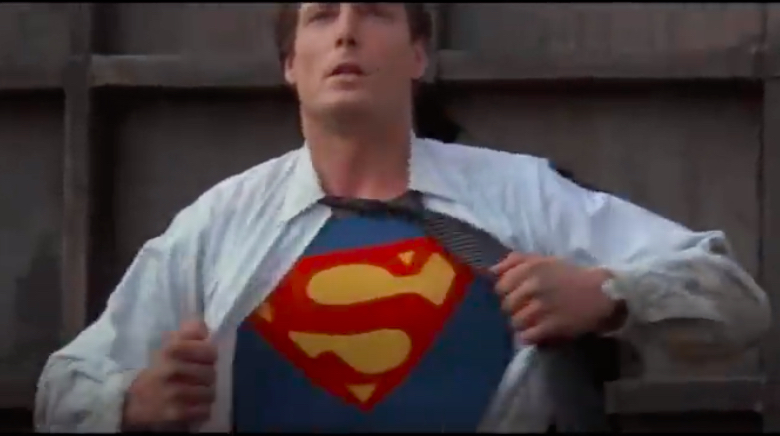
Understanding your strengths as a screenwriter turns them into your superpowers. Avoiding your personal Kryptonite and learning your Screenwriting Strengths means you can choose ideas and genres that showcase what you’re best at, and that’s pure Career Rocket Fuel.
When frustrated screenwriters say to themselves, “To hell with Hollywood, everything they make is crap. If that’s what they want, that’s what I’m gonna give ‘em. I’m gonna write one of those pieces of crap and sell it for Big Money,” THEY INEVITABLY FAIL.
They’re faking it.
The material is flat. Dry. Forced.
Even if it’s well crafted, something’s not quite right.
What didn’t excite you can’t possibly turn us on.
When writers fake it, they ignore the very keys to their success.
Remember when you were a kid and nervous about fitting in? Mom said, “Just be yourself.”
As usual, Mom was right.
The secret to being yourself as a writer is knowing what you do best, as well as what really matters to you.
What you’re good at and what you want to say.
Identifying your strengths is the key to choosing “What to Write Next?”
“What to Write Next?” is the single most important decision a writer makes. When you understand your Screenwriting Strengths, these can become a factor in making that crucial choice.
Ask yourself some key questions:
What aspect of screenwriting comes easiest to you?
Your Favorite Genre to write in, the one you write in most often, and why.
Your Second Favorite Genre to write and why.
Your Least Favorite and why?
What genres are you most attracted to in the movie theatre?
What genres do you enjoy when streaming from the comfort of your couch?
What do you enjoy most about screenwriting – creating new ideas, pitching, developing ideas, research, writing dialogue or description, creating characters, developing arcs, theme, outlining, structuring a script, scene construction, coming up with plot twists, writing action scenes, or?
I am most happy when I am working on or writing:
Action
Ideas/Premises
Description
Visuals
Dialogue
Story Lines
Characters & Relationships
Character Arcs
Conflict
Fantasy Elements
Theme
Outlines
Typing FADE OUT
Or _________________________
“If as a screenwriter I never, ever again had to work on _________ I would be thrilled.”
If I had a magic wand and could create your Perfect Imaginary Screenwriting Partner, POOF! what would be their greatest strength as a writer?
These questions can help clue you into your Screenwriting Strengths
In other words, if you’re great at fluent, resonant dialogue between men and women, possibly you’re barking up the wrong tree trying for the fart humor, potty jokes and slapstick of say a traditional Adam Sandler vehicle.
If you’re stumped by structure, avoid twisty suspense thrillers. And time travel stories. They depend on brilliant structure to succeed.
If you crave character development, delve into buddy stories, dramas, character-driven material in your Second Favorite Genre, psychological thrillers and romances.
Do you write awesome, rock ‘em sock ‘em action? Take a crack at adventure, capers, sci-fi, epics, horror, sports or westerns.
Say you’re the King of Comedy, what comic genres and major comic movie stars best match your particular style? Put your spotlight there.
Even the type of dialogue you excel at – or struggle with – is a strong clue to your strengths as a writer and the genres you should be writing in or avoiding.
Have you got an amazing ear for authentic kids’ voices? How do family films or coming of age stories sound?
Do you channel teen talk, love inventing a futuristic vocabulary or whip out witty wisecracks? Focus on those genres that require that specific skill to be outstanding.
Discover the Genre you Excel at and Stick to the General Vicinity
Often aspiring writers fret about being able to show their range, hoping that scripts in a wide variety of genres will impress potential reps and industry insiders. But It’s important to play to your strengths.
You don’t have to write broad comedy after broad comedy, but if that’s your favorite genre, but it might not be such a wise career plan to toss in a serial killer thriller. Write a smart comedy, a character driven comedy, a dramedy.
You want to become, “that writer who has amazing comic set pieces,” or “that writer who creates great characters.” You want to become the “go-to guy,” so that when someone who has an open writing assignment – a paying job – needs a writer to make their thriller scarier or punch up a comedy or add depth to a drama –
But I some writers doom themselves to failure right from the start.
The fastest way to ensure a Pitch Fail is… to READ IT.
NO reading EVER!
It’s your story right?
So you should know it. And be able to look the person in the eye and tell them the story. That makes a huge difference in connecting with the listener.
Bonus:
When you look at the person you are pitching to you can read their reactions. You can tell when you’ve grabbed their interest, and when you’ve lost them.
This is an incredible source of info about what works and what doesn’t in your pitch – and in your story.
As a producer bringing a writer in to pitch to a buyer, I would always sit where I could see the Most Important Person in the room – as there is often a junior exec present as well. And I would watch their reaction. I didn’t watch the writer. I wanted to see what resonated with the MIP. When did they lean forward, eyes lighting up, showing they were interested or intrigued? When did they look puzzled, indicating we had lost them? When did they lean back, and look disengaged. That’s where would gain the invaluable feedback for the writer as to what was working and what we needed to rework for the next pitch.
the original guru on pitching and hitting it out of the ballpark
Yogi Berra, the famous ball player said, “You can’t think and hit the ball at the same time.”
You just can’t think and pitch at the same time! Not if you want to hit it out of the park.